
A lot of the technology that underpins the Internet and our digital experiences uses “open source” software.
What does that even mean?
Open source software is software where the source code is available and developers can both check what is in it, as well as fixing it and improving on it. Essentially it is the opposite to proprietary software where the code is protected from prying eyes and any modifications.
The more technical and legal definition of what that has to look like is a lot more verbose, and depending on the type of OSS license there are quite a few variants on the theme.
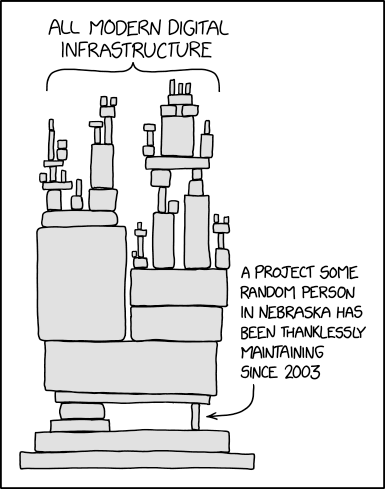
While bigger software projects are probably that little bit higher profile and easier to get maintainers (paid or otherwise) a lot of software is important or essential, but it’s not as glamorous. What that means in reality is that when stuff breaks, or when a security issue is identified, that it’s more of a problem to get it fixed quickly.
XKCD’s comic is the one we all use to illustrate the problem:
There’s been a lot of discussion in multiple fora over the years about how best to fund open source and there are some very large companies who have managed to build highly successful businesses around OSS. Sadly, however, they’re the exception and not the rule. A lot of open source work gets done against the odds and without the financial backing it could benefit from.
About a year ago I became involved in Nominet’s DNS Fund. I’ve worked in the Internet technology sector for well over 20 years and I’ve been actively engaged in policy and governance for a lot of that time. The DNS Fund for me is one of the more interesting and exciting projects I’ve had the honour to be involved with in the past 20 plus years. Nominet, in common with some other country code domain name registries, has a “public benefit” angle, so it uses part of its profits for various community initiatives. The DNS Fund is, to my mind, the best use of those funds that they’ve come up with so far.
The Domain Name System (DNS) is one of the Internet’s core pieces of infrastructure. Every time you visit a website, send an email, use an app or use any online service, DNS translates human-readable names into the addresses computers use to communicate. It’s something most people never think about until it stops working.
So what is the DNS Fund?
It’s a grant fund that supports the open source projects and maintainers keeping critical DNS infrastructure secure and stable. £370,000 in its first year, and £650,000 this year.
Applications are open now, with a deadline of 17th August 2026. Full details here.
Other domain name registries should seriously consider doing something similar. The DNS needs investment in the fundamentals, not in glossy annual reports or overpaid consultants.
Leave a Reply